


Energy Saving Week 2026 runs from 19th to 25th January. For businesses across the UK, it presents the perfect opportunity to reassess operational costs and implement meaningful changes.
Lighting accounts for approximately 40% of a commercial building’s electricity consumption. That figure represents a significant opportunity. With energy prices remaining volatile and sustainability commitments becoming non-negotiable, smart lighting solutions offer one of the fastest returns on investment available to facility managers and business owners.
Here are five practical ways businesses can leverage intelligent lighting design to reduce costs, improve efficiency, and create better environments for staff and customers alike.
The simplest and most impactful change any business can make is transitioning from traditional lighting to LED technology.
LED lighting uses up to 75% less energy than incandescent alternatives. The lifespan extends dramatically too: LED bulbs last 25 times longer than their traditional counterparts. For businesses operating across multiple sites or large floor spaces, these savings compound quickly.
The benefits extend beyond the electricity bill:
• Reduced maintenance costs : fewer bulb replacements mean less time and labour spent on upkeep
• Lower heat output : LED fixtures generate minimal heat, reducing the load on air conditioning systems during warmer months
• Improved light quality : modern LEDs deliver consistent, high-quality illumination with excellent colour rendering
Offices, retail spaces, gyms, and hotels are all seeing substantial returns from LED retrofits. Many businesses recover their initial investment within 18 to 24 months through energy savings alone.
Intelligent lighting systems use occupancy sensors, daylight harvesting and automated scheduling to ensure lights operate only when and where needed. The result is a lighting infrastructure that responds to real-time conditions rather than running at full capacity regardless of occupancy or natural light levels.
Key smart control features include:
• Occupancy and motion sensors : lights activate when spaces are in use and dim or switch off when empty
• Daylight harvesting : sensors measure ambient natural light and adjust artificial lighting accordingly, maintaining consistent illumination without waste
• Scheduled dimming : automated profiles reduce output during off-peak hours or align with business operating times
• Zone-based control : different areas operate independently, preventing unnecessary lighting in unoccupied sections
For hotels, this might mean corridor lighting that dims overnight. For gyms, it could be studio lights that activate only during classes. The applications are broad, and the savings are measurable.
Open-plan layouts dominate modern commercial design. They offer flexibility and collaboration opportunities, but they also create lighting challenges.
A single, uniform lighting scheme rarely serves every function within a large open space. Meeting areas require different illumination than focused workstations. Breakout zones have different needs than reception desks.
Modular linear lighting systems solve this problem elegantly.
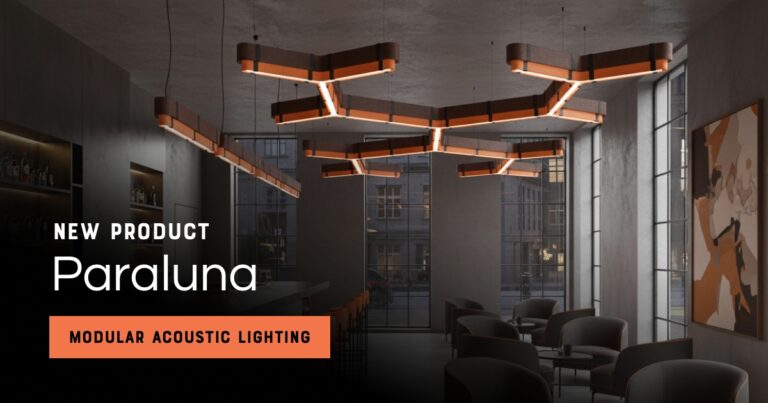
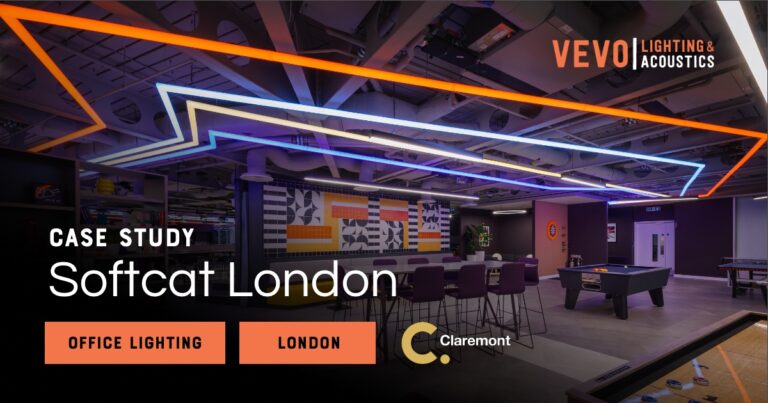
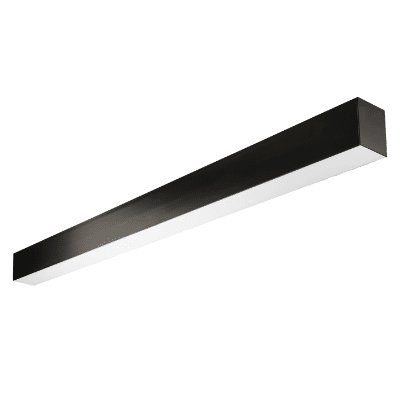
These systems allow designers and facility managers to create distinct lighting zones within a single space. L, T, X, and Y configurations link together to form continuous runs that can be tailored to specific areas. Each zone can be controlled independently, ensuring appropriate light levels without over-illuminating adjacent spaces.
The energy benefits are significant:
• Targeted illumination : light goes where it is needed, reducing overall consumption
• Scalable configurations : systems expand or reconfigure as business needs evolve
• Integrated smart controls : modular systems pair seamlessly with occupancy sensors and dimming schedules
For businesses seeking commercial lighting design that balances aesthetics, functionality and efficiency, modular linear systems are a solution.
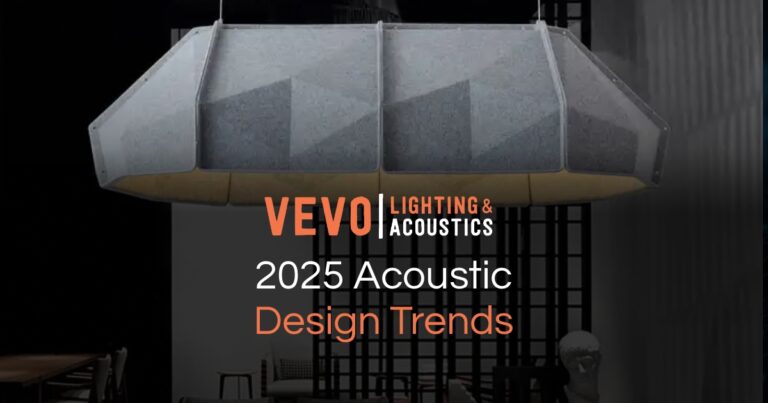
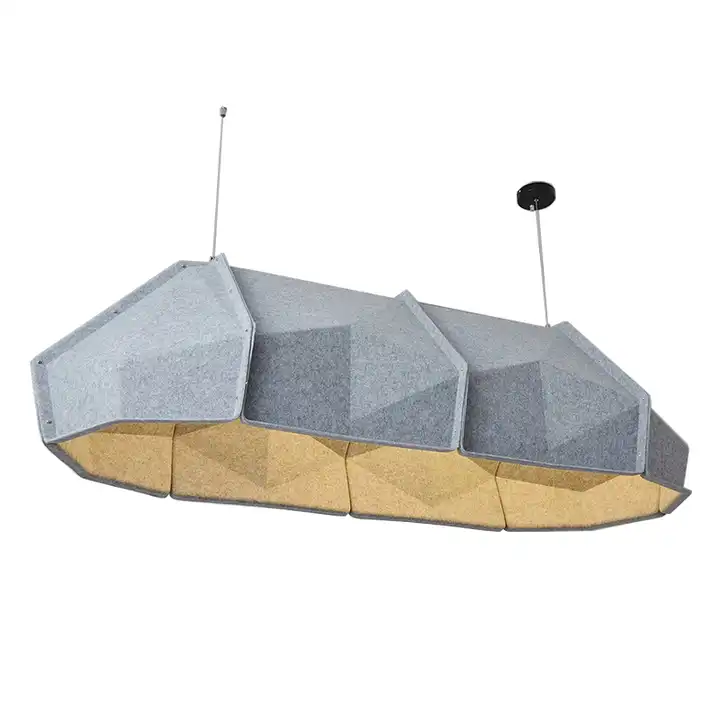
Acoustic lighting delivers two functions from a single installation: illumination and sound absorption.
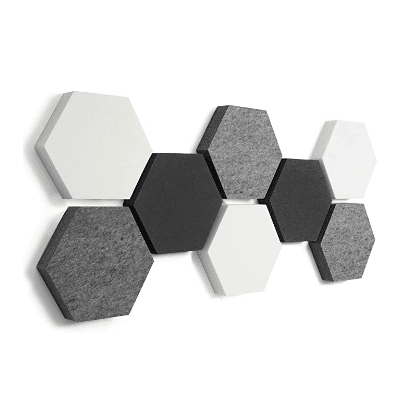
Open-plan offices, restaurants, and hospitality venues often struggle with noise. Hard surfaces reflect sound, creating distracting reverberation that impacts concentration, conversation, and customer experience. Traditionally, businesses would address lighting and acoustics separately: installing light fixtures alongside acoustic panels or ceiling treatments.
Acoustic light fittings combine both requirements into one product. These fixtures incorporate sound-absorbing materials directly into the luminaire design, reducing echo while providing high-quality LED illumination.
The efficiency gains come from multiple angles:
• Reduced material requirements : one product replaces two, lowering manufacturing and installation impact
• Simplified infrastructure : fewer ceiling-mounted elements mean less complexity and lower maintenance
• Energy-efficient LED cores : acoustic fittings utilise the same low-consumption LED technology as standard fixtures
For businesses pursuing eco-conscious design, acoustic lighting represents a smart consolidation of resources. The aesthetic benefits are considerable too: modern acoustic fixtures enhance interior design rather than compromising it.
Energy efficiency is not solely about consuming less power. It is also about using lighting more intelligently to support the people within a space.
Human-centric lighting aligns artificial light with natural circadian rhythms. Colour temperature and intensity shift throughout the day: cooler, brighter light in the morning to promote alertness, warmer tones in the afternoon and evening to support relaxation.
This approach delivers measurable benefits:
• Improved productivity : staff working under circadian-aligned lighting report higher focus and reduced fatigue
• Better wellbeing : appropriate lighting reduces eye strain, headaches, and the negative effects of prolonged artificial light exposure
• Reduced absenteeism : healthier, more comfortable environments contribute to lower sick leave rates
From an energy perspective, human-centric systems avoid over-lighting. Rather than maintaining maximum brightness throughout operating hours, they modulate output based on time of day and occupancy. The result is a lighting scheme that serves people better while consuming less.
For offices, gyms, and hospitality venues, human-centric strategies represent the next evolution in commercial lighting design.
Effective commercial lighting design requires more than product selection. It includes an understanding of how light interacts with the building, how people move through spaces, and how technology can be used to increase efficiency and experience.
Vevo Lighting specialises in designing, supplying, and installing intelligent lighting solutions for businesses across sectors. From LED upgrades to bespoke modular systems and acoustic fixtures, the team delivers end-to-end support tailored to each project’s requirements.
To explore how smart lighting could transform energy costs and workplace quality, get in touch.